
In India, small and medium enterprises (SMEs) have an enormous impact on the economy of the countrywide. 63 million SMEs contribute 30% of GDP and provide jobs to 110 million people (Ministry of Micro, Small and Medium Enterprises, 2024). Majority of the SMEs contend with the informal systems, insecure availability of loans in the formal institutions, and unfixed regulations. Long-term planning may seem like a luxury especially given that there is little institutional assistance and a substantial amount of risk. ...Under such conditions, the way that business owners conceptualize risk and future expansion is usually influenced more by experience. Since the decision-making is limited only to a few owners or managers, certain behavioral influences result in the degradation of decision-making. Behavioral biases are thinking shortcuts, which may create erroneous judgments. These prejudices influence the way business owners take their finance, marketing and operation decisions all of which impacts on the final outcome of their businesses.
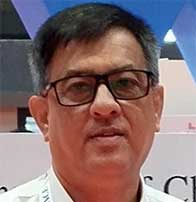
Dr.(CA) Sanjib Kumar Basu is working as the Dean in the Post Graduate and Research Department of Commerce of St. Xavier’s College (Autonomous), Kolkata. He did his B.Com. (Honours) from St. Xavier’s College, Kolkata and completed his post-graduation in commerce (M.Com.) with ‘Accounting & Finance” as specialization from University of Calcutta. He wasawarded Ph.D. in Commerce by the same university in 2001. Dr. Basu is a qualified Chartered Accountant and a Fellow Member of the Institute of Chartered Accountants of India. He has beenin academics for over thirty years, teaching both at the undergraduate and post-graduate levels both at St. Xavier’s College and St. Xavier’s University, Kolkata. Dr. Basu is the author of eight textbooks for B.com course and professional bodies examinations including the book ‘Auditing and Assurance’published by Pearson Education. He has presented a number of Research Papers at various National and International seminars in different countries including Singapore, United Kingdom, Poland and Australia.
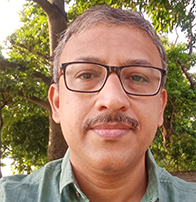
Dr. Sumanta Dutta is an Assistant Professor of the Postgraduate and Research Department of Commerce (M. Com.), St. Xavier’s College (Autonomous), Kolkata. He is the State President (West Bengal) of the Department of Research and Innovation Wing of the Research Foundation of India & National Advisory Board Member of Research Foundation of India & RFI-CARE. He has over 24 years of experience in teaching and research. He is also the associate editor of International Journal of Academic Research & Development (IJARD) (Peer-reviewed Journal indexed in Crossref). He has contributed ten edited books, two case books, and two research books to a reputed publishing house in India. He obtained one patent and two copyrights. He has acted as a resource person for more than 114 workshops conducted (both offline and online) by various research bodies in India on the theme of research ethics. He has also contributed more than 60 research papers to various national and international journals, including UGC-Care, Scopus, and ABDC. His work has been well cited both in the SSRN top ten download list and in Google Scholar. He has completed one Short Term Empirical Research Project under ICSSR. He has edited books with international publishers like Bentham Science and Taylor and Francis. Recently, he obtained Global Achievers of India Award 2025 supported by Niti Ayog.