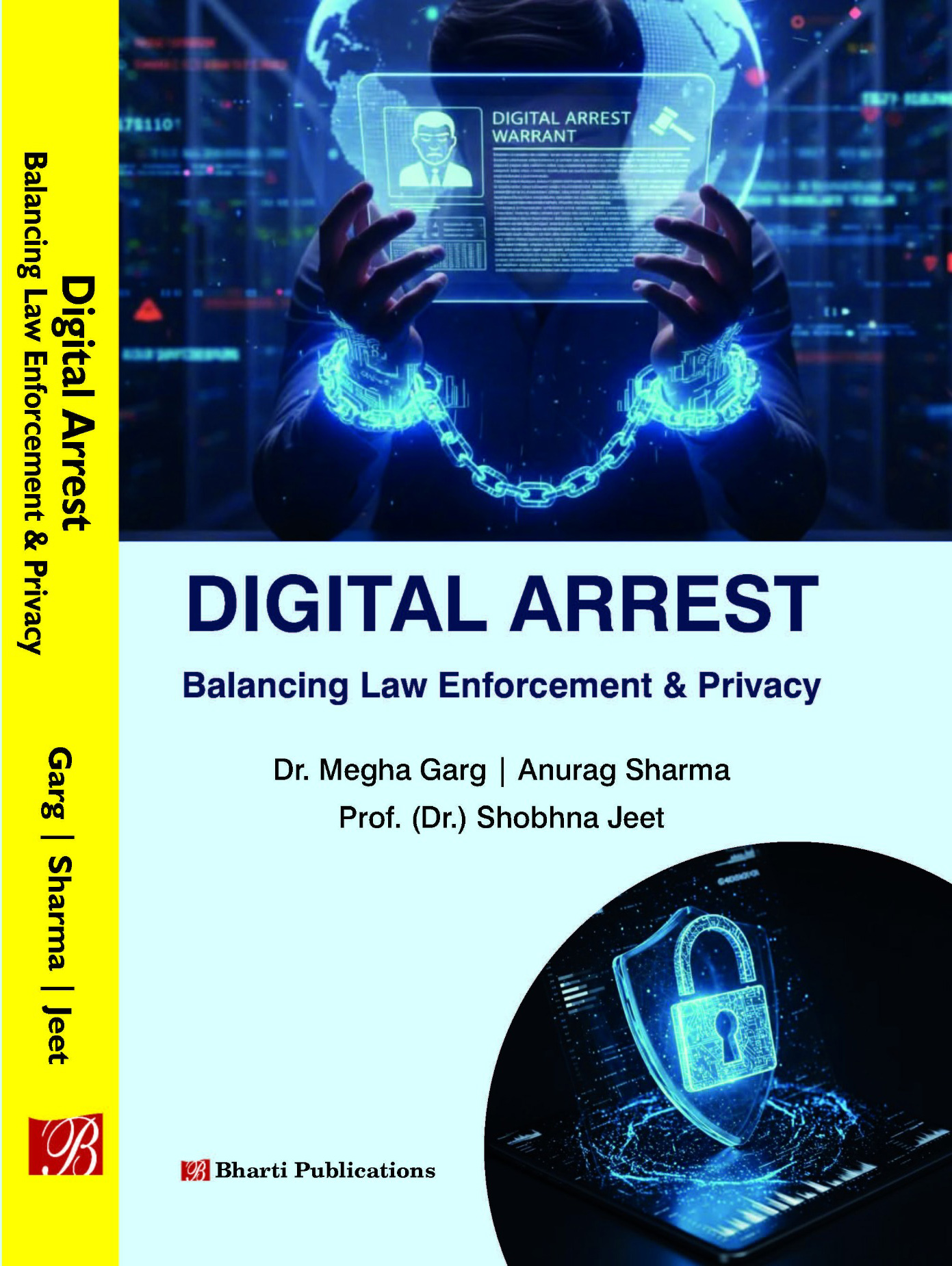

The book delves into one of the most urgent challenges of the digital age: the intersection of cyber-enabled law enforcement and the fundamental right to privacy. This book unpacks the dual realities embodied in the concept of “digital arrest”— on the one hand, the growing sophistication of cyber scams where criminals impersonate police or judicial authorities to coerce and extort ordinary people; on the other, the increasing use of digital technologies by bona fide law enforcement to detect, apprehend, and prevent crime in cyberspace. The book first introduces the landscape of digital arrest scams. ... These scams exploit advanced psychological manipulation and technological deception, including video calls, fake documentation, and social engineering, to instill fear and induce compliance. The book highlights the notable challenges faced by law enforcement: not only must they pursue sophisticated digital criminals, but they must also do so within the bounds of emerging privacy laws and societal expectations, ensuring that surveillance and investigative tactics remain both legal and just. Further, the volume reviews the international legal response to digital crime, comparative case law, and the best practices for effective and rightsrespecting digital policing.
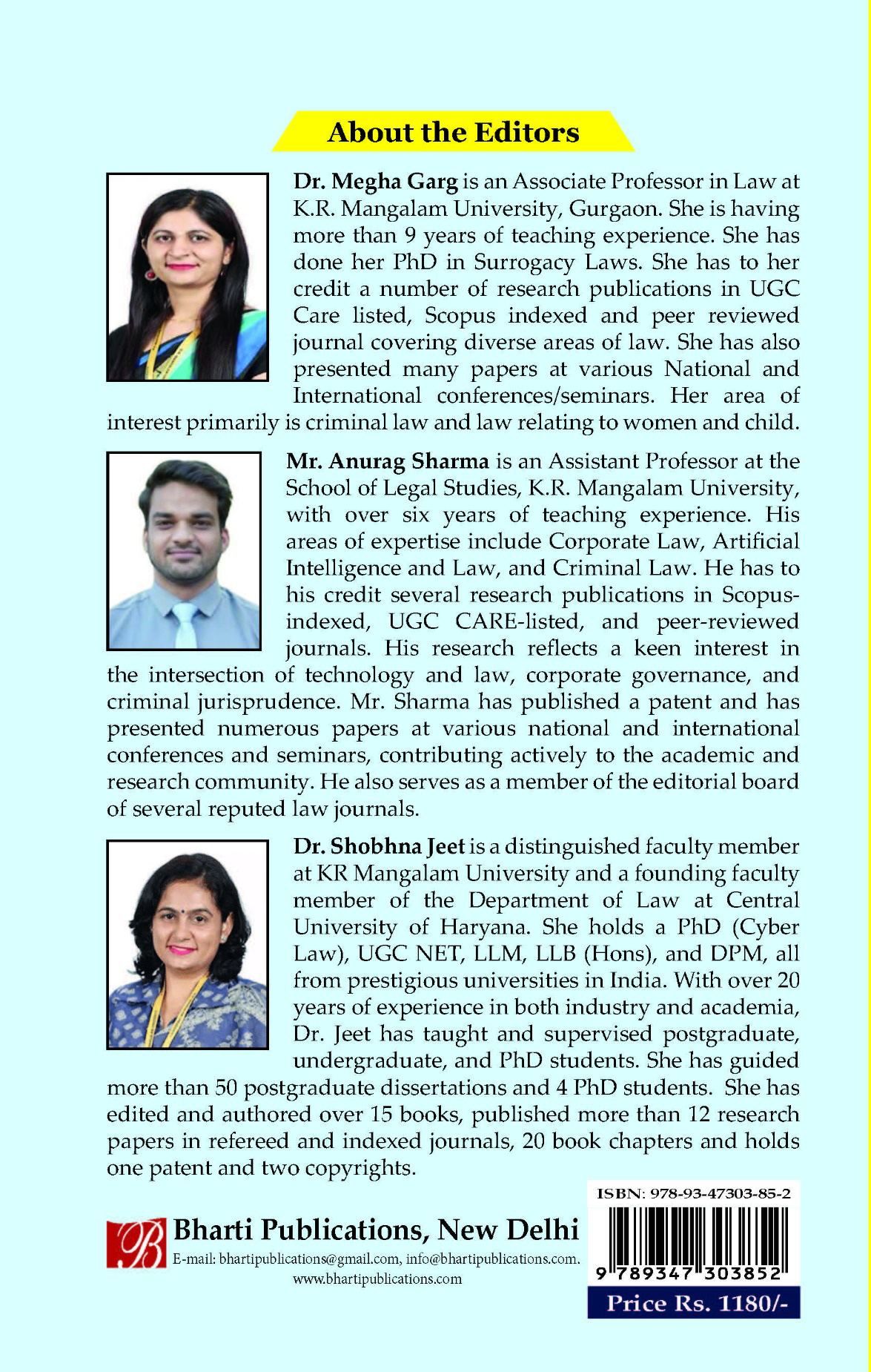
 Dr. Megha Garg is an Associate Professor in Law at
K.R. Mangalam University, Gurgaon. She is having
more than 9 years of teaching experience. She has
done her PhD in Surrogacy Laws. She has to her
credit a number of research publications in UGC
Care listed, Scopus indexed and peer reviewed
journal covering diverse areas of law. She has also
presented many papers at various National and
International conferences/seminars. Her area of
interest primarily is criminal law and law relating to women and child.
Dr. Megha Garg is an Associate Professor in Law at
K.R. Mangalam University, Gurgaon. She is having
more than 9 years of teaching experience. She has
done her PhD in Surrogacy Laws. She has to her
credit a number of research publications in UGC
Care listed, Scopus indexed and peer reviewed
journal covering diverse areas of law. She has also
presented many papers at various National and
International conferences/seminars. Her area of
interest primarily is criminal law and law relating to women and child.
 Anurag Sharmais an Assistant Professor at the
School of Legal Studies, K.R. Mangalam University,
with over six years of teaching experience. His
areas of expertise include Corporate Law, Artificial
Intelligence and Law, and Criminal Law. He has to
his credit several research publications in Scopusindexed, UGC CARE-listed, and
peer-reviewed
journals. His research reflects a keen interest in
the intersection of technology and law, corporate governance, and
criminal jurisprudence. Mr. Sharma has published a patent and has
presented numerous papers at various national and international
conferences and seminars, contributing actively to the academic and
research community. He also serves as a member of the editorial board
of several reputed law journals.
Anurag Sharmais an Assistant Professor at the
School of Legal Studies, K.R. Mangalam University,
with over six years of teaching experience. His
areas of expertise include Corporate Law, Artificial
Intelligence and Law, and Criminal Law. He has to
his credit several research publications in Scopusindexed, UGC CARE-listed, and
peer-reviewed
journals. His research reflects a keen interest in
the intersection of technology and law, corporate governance, and
criminal jurisprudence. Mr. Sharma has published a patent and has
presented numerous papers at various national and international
conferences and seminars, contributing actively to the academic and
research community. He also serves as a member of the editorial board
of several reputed law journals.
 Prof. (Dr.) Shobhna Jeet is a distinguished faculty member
at KR Mangalam University and a founding faculty
member of the Department of Law at Central
University of Haryana. She holds a PhD (Cyber
Law), UGC NET, LLM, LLB (Hons), and DPM, all
from prestigious universities in India. With over 20
years of experience in both industry and academia,
Dr. Jeet has taught and supervised postgraduate,
undergraduate, and PhD students. She has guided
more than 50 postgraduate dissertations and 4 PhD students. She has
edited and authored over 15 books, published more than 12 research
papers in refereed and indexed journals, 20 book chapters and holds
one patent and two copyrights.
Prof. (Dr.) Shobhna Jeet is a distinguished faculty member
at KR Mangalam University and a founding faculty
member of the Department of Law at Central
University of Haryana. She holds a PhD (Cyber
Law), UGC NET, LLM, LLB (Hons), and DPM, all
from prestigious universities in India. With over 20
years of experience in both industry and academia,
Dr. Jeet has taught and supervised postgraduate,
undergraduate, and PhD students. She has guided
more than 50 postgraduate dissertations and 4 PhD students. She has
edited and authored over 15 books, published more than 12 research
papers in refereed and indexed journals, 20 book chapters and holds
one patent and two copyrights.